Ganesh Chaturthi 2028: Date, Puja Muhurat, Tithi & Celebration Guide
Ganesha's installation on Bhadrapada Shukla Chaturthi; ten days to Anant Chaturdashi.
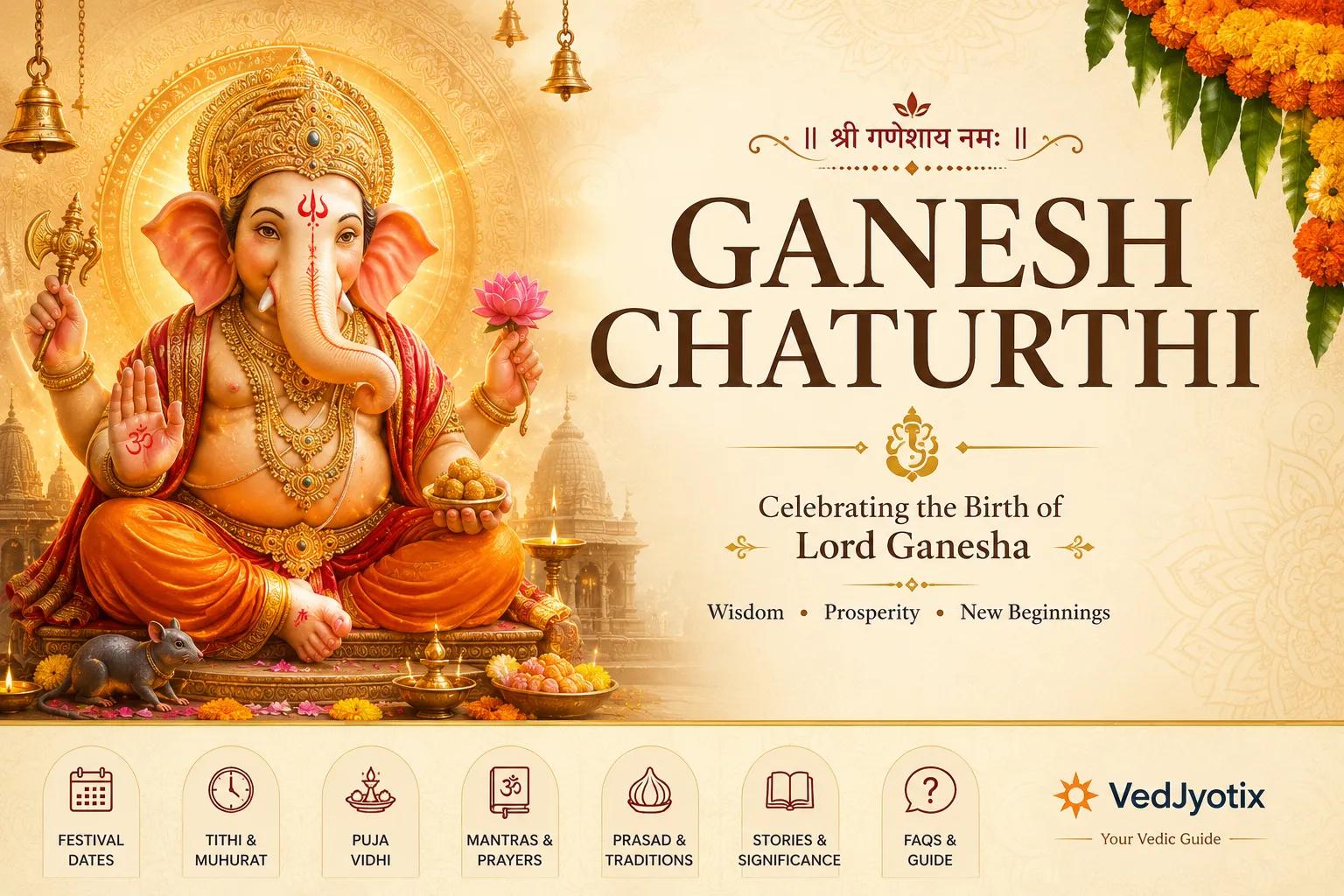
Ganesh Chaturthi 2028 — At a Glance
Ganesh Chaturthi 2028 falls on Wednesday, 23 August 2028. The recommended Madhyahna puja muhurat is 10:43 – 13:18.
- Date
- Wednesday, 23 August 2028
- Tithi begins
- 05:14 AM, Wednesday, 23 August 2028
- Tithi ends
- 01:58 AM, Thursday, 24 August 2028
- Sankalp (sunrise)
- 05:35
- Madhyahna puja muhurat
- 10:43 – 13:18
- Fasting window (tithi)
- 05:14 → 2028-08-24 · 01:58
- Parana (tithi ends)
- 01:58
- Muhurat duration
- 2 hr 35 min
- Ganesh Visarjan (Anant Chaturdashi)
- Saturday, 2 September 2028 →
Muhurat & timings
Kashi/IST · astronomically computed- Sankalp (sunrise)05:35
- Madhyahna puja muhurat10:43 – 13:18
- Fasting window (tithi)05:14 → 2028-08-24 · 01:58
- Parana (tithi ends)01:582028-08-24
Festival days follow the classical attribution rules — udaya (sunrise), pradosha (evening), nishita (midnight), madhyahna or aparahna vyapini as each festival prescribes — computed for Kashi/Varanasi (IST). Regional observance can differ by a day in some years.
Why Ganesh Chaturthi is celebrated
Ganesh Chaturthi falls on the Shukla Chaturthi of Bhadrapada and marks Ganesha's birth. He is Vighnaharta, the remover of obstacles, and also Vighnakarta, the one who places them — the same power, used to test whether an undertaking deserves to proceed. No rite, journey or venture begins without invoking him first.
The puja is performed in madhyahna kaal, the midday window, because Ganesha is held to have been born at noon. The idol is installed for a fixed number of days — one and a half, three, five, seven or ten — and then immersed. The immersion is not a discarding but the point of the whole observance: what is welcomed with full ceremony is also released, and the clay returns to the water it came from.
On this night, custom holds that the moon should not be looked at. Seeing it is said to bring mithya dosha — a false accusation.
Ganesh Chaturthi puja vidhi — in brief
- Bathe, wear clean clothes, and prepare the platform with a clean cloth before madhyahna kaal.
- Install the idol facing east or north. Sprinkle water, and perform pranapratishtha — invoking the deity into the image.
- Offer durva grass in twenty-one blades, red hibiscus, sandal paste, akshat and kumkum.
- Offer twenty-one modaks, or as many as can be made. Modak is his portion; nothing substitutes for it.
- Recite the Ganapati Atharvashirsha or the Sankatnashan Ganesh Stotra, then perform aarti.
- Repeat aarti morning and evening for as many days as the idol is kept.
- On the final day, offer a farewell puja, ask forgiveness for lapses in the observance, and immerse the idol in water.
Essential puja samagri
- A clay (mitti) idol of Ganesha
- Durva grass (in bunches of 21 blades)
- Red hibiscus and flowers
- Modak — steamed or fried
- Sandal paste, kumkum, akshat
- A whole coconut and bananas
- A janeu (sacred thread) for the deity
- Panchamrit
- Incense, camphor and a diya
- Betel leaf and nut
Ganesh Chaturthi — Frequently Asked Questions
Why should the moon not be seen on Ganesh Chaturthi?
The moon mocked Ganesha and was cursed that whoever looked at it on this tithi would face a false accusation. Krishna himself was said to suffer it in the Syamantaka jewel episode; reciting that story is the prescribed remedy.
How many days should the idol be kept?
One and a half, three, five, seven or ten days — all are valid. What matters is that aarti is performed each day and the visarjan is done as promised at installation.
What is offered to Ganesha?
Durva grass in twenty-one blades, red flowers, and modak. Modak is his particular offering and is not substituted.
Other major festivals in 2028
- Makar Sankranti — 15 January 2028
- Vasant Panchami — 1 February 2028
- Maha Shivaratri — 23 February 2028
- Holika Dahan — 10 March 2028
- Holi — 11 March 2028
- Chaitra Navratri begins — 27 March 2028
- Ram Navami — 3 April 2028
- Akshaya Tritiya — 27 April 2028
- Jagannath Rath Yatra — 24 June 2028
- Guru Purnima — 6 July 2028
- Nag Panchami — 26 July 2028
- Raksha Bandhan — 5 August 2028
- Krishna Janmashtami — 13 August 2028
- Hartalika Teej — 22 August 2028
- Anant Chaturdashi — 2 September 2028
- Pitru Paksha begins — 4 September 2028
- Sharad Navratri begins — 19 September 2028
- Durga Ashtami — 26 September 2028
- Maha Navami — 27 September 2028
- Dussehra / Vijayadashami — 27 September 2028
- Karwa Chauth — 7 October 2028
- Dhanteras — 15 October 2028
- Naraka Chaturdashi (Choti Diwali) — 17 October 2028
- Diwali (Lakshmi Puja) — 17 October 2028
- Govardhan Puja — 18 October 2028
- Bhai Dooj — 19 October 2028
- Chhath Puja — 23 October 2028
- Kartik Purnima (Dev Deepawali) — 2 November 2028
- Guru Nanak Jayanti — 2 November 2028
- Hindu Festivals 2028 →