Ganesh Chaturthi 1918
Ganesha's installation on Bhadrapada Shukla Chaturthi; ten days to Anant Chaturdashi.
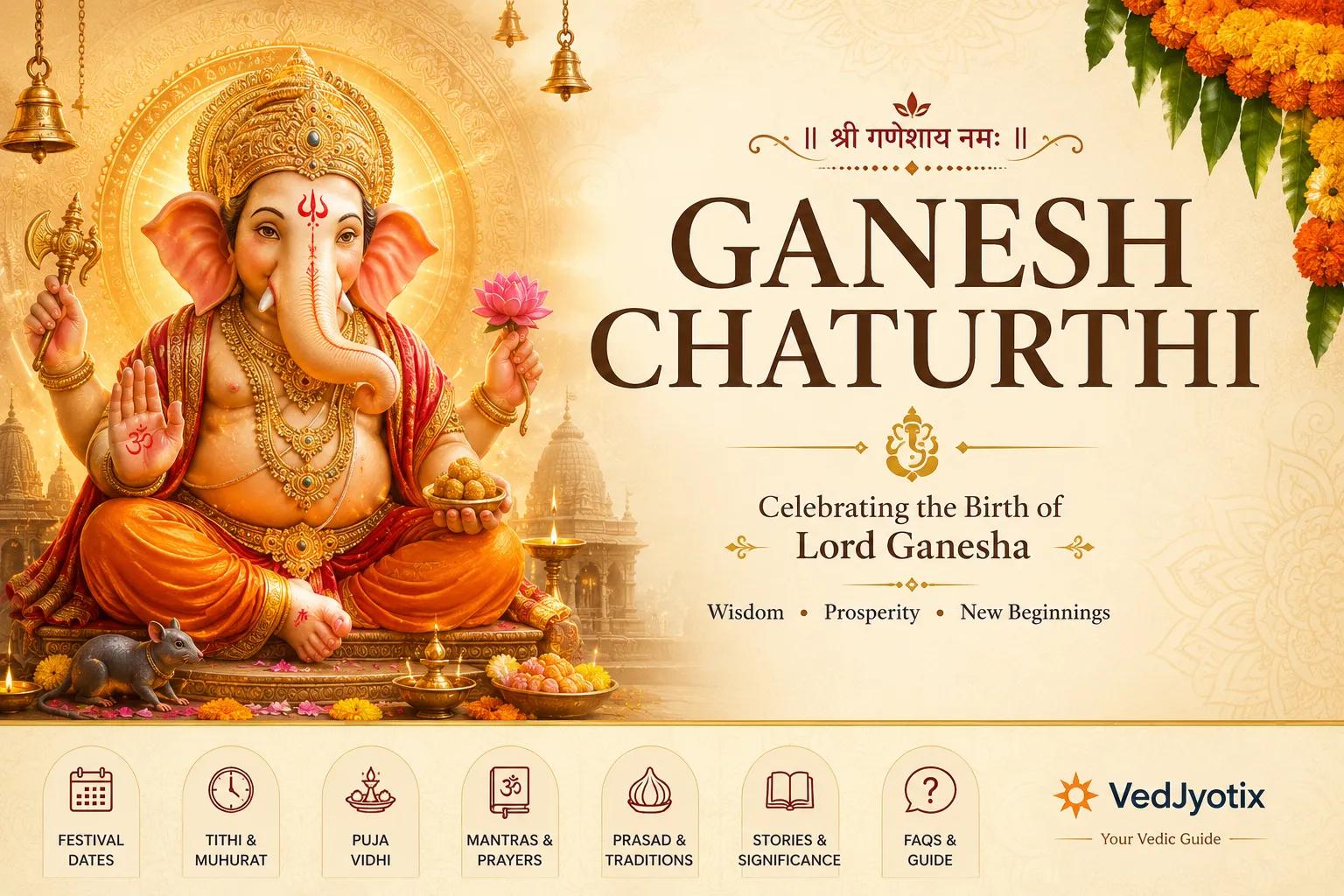
Ganesh Chaturthi 1918 — At a Glance
Ganesh Chaturthi 1918 falls on Monday, 9 September 1918. The recommended Madhyahna puja muhurat is 10:40 – 13:10.
- Date
- Monday, 9 September 1918
- Tithi begins
- 10:58 PM, Sunday, 8 September 1918
- Tithi ends
- 01:32 AM, Tuesday, 10 September 1918
- Sankalp (sunrise)
- 05:42
- Madhyahna puja muhurat
- 10:40 – 13:10
- Fasting window (tithi)
- 1918-09-08 · 22:58 → 1918-09-10 · 01:32
- Parana (tithi ends)
- 01:32
- Muhurat duration
- 2 hr 30 min
- Ganesh Visarjan (Anant Chaturdashi)
- Thursday, 19 September 1918 →
Muhurat & timings
Kashi/IST · astronomically computed- Sankalp (sunrise)05:42
- Madhyahna puja muhurat10:40 – 13:10
- Fasting window (tithi)1918-09-08 · 22:58 → 1918-09-10 · 01:32
- Parana (tithi ends)01:321918-09-10
Festival days follow the classical attribution rules — udaya (sunrise), pradosha (evening), nishita (midnight), madhyahna or aparahna vyapini as each festival prescribes — computed for Kashi/Varanasi (IST). Regional observance can differ by a day in some years.
Read the Ganesh Chaturthi puja vidhi, vrat rules and kathaGanesh Chaturthi — Frequently Asked Questions
Why should the moon not be seen on Ganesh Chaturthi?
The moon mocked Ganesha and was cursed that whoever looked at it on this tithi would face a false accusation. Krishna himself was said to suffer it in the Syamantaka jewel episode; reciting that story is the prescribed remedy.
How many days should the idol be kept?
One and a half, three, five, seven or ten days — all are valid. What matters is that aarti is performed each day and the visarjan is done as promised at installation.
What is offered to Ganesha?
Durva grass in twenty-one blades, red flowers, and modak. Modak is his particular offering and is not substituted.